

TRAINING
OUR TRAINING PROGRAMS IN ANTHROPOLOGY AND SOCIAL IMPACT MANAGEMENT

TRAINING ON SOCIAL IMPACT AND RISK MANAGEMENT, SOCIAL ACCEPTABILITY
To regulate activities related to major infrastructure projects and promote “good governance” and “poverty reduction,” international financial institutions (IFIs) and the global community have gradually developed specific concepts and tools such as the Kimberley Process and the Equator Principles (2003), and the International Finance Corporation’s Performance Standards (2006).
Companies seeking investment funds from these institutions are required to comply with IFI performance standards. Today, compliance with these standards is increasingly adopted voluntarily by companies, driven by the growing need to maintain social peace among local communities in sensitive countries and to develop corporate social responsibility.
Training programs are tailored to the needs and target audiences. They always combine theoretical aspects, case studies, and role-playing exercises.
Duration: 1 to 5 days depending on participants’ needs and prior knowledge
LEARNING OBJECTIVES
- Understand the importance and obligations related to considering and monitoring social aspects
- Draft terms of reference for ESIA, RAP, ESMP, etc.
- Understand project stages and processes to identify, prevent, and mitigate social risks and impacts
- Acquire methods to assess, measure, and monitor social impacts
- Improve project viability and contribute to sustainable development
Satisfaction rate: 4.33/5
TRAINING IN SURVEY METHODS AND SOCIAL DATA COLLECTION
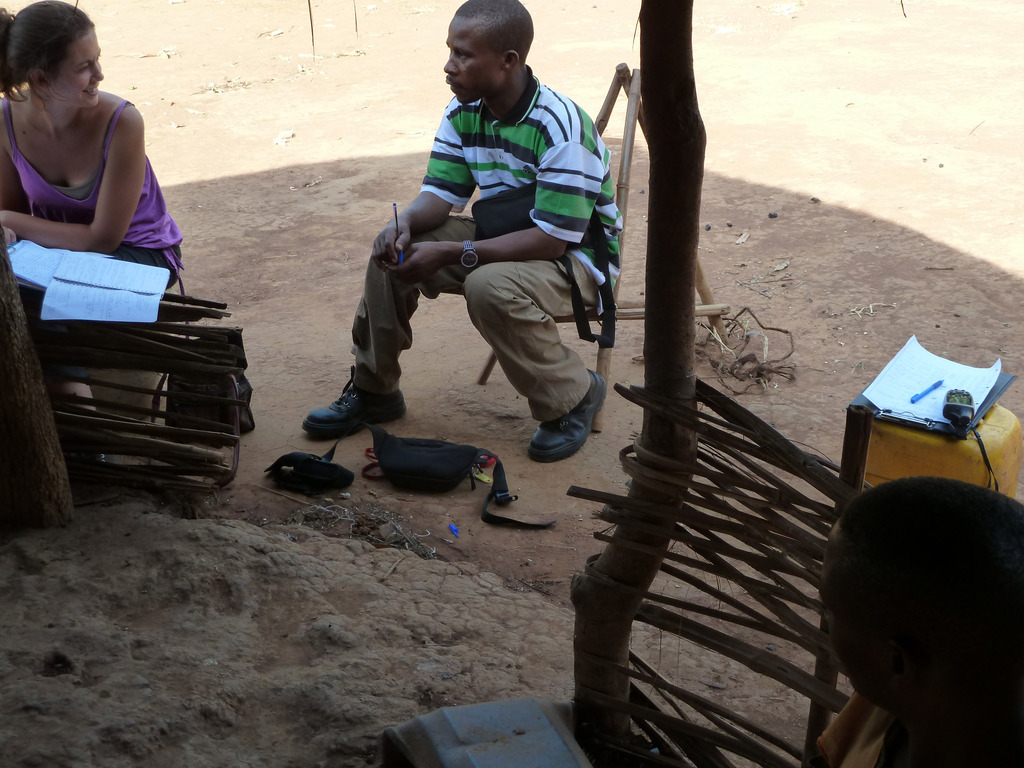
Social data analysis is often based on existing statistical and quantitative data, and rarely on qualitative data—yet these are equally essential for understanding observed social trends and phenomena. This training addresses this need by combining quantitative approaches (e.g., questionnaires) and qualitative approaches.
Participants will cover all aspects of social surveys, from reading and interpreting data to creating it: defining a survey protocol, field implementation, data analysis, formatting, editing, and publishing.
The program combines lectures, practical workshops, field visits, and peer exchanges to ensure tool mastery and practical application.
Duration: 1 to 8 days depending on participants’ needs and prior knowledge
LEARNING OBJECTIVES
- Acquire a toolkit to understand or conduct qualitative and/or quantitative surveys
- Learn to develop a reproducible methodology delivering comparable results over time
- Build a survey protocol and rigorously collect and analyze data
- Become familiar with software for qualitative data analysis
- Learn how to format and publish quantitative and qualitative data or include them in scientific articles
Satisfaction rate: 95.6%

TRAINING ON PUBLIC PARTICIPATION IN CONSULTATION PROCESSES
The idea of participation is not new, but over the past 20 years it has become a major issue in public policy and democratic governance. However, experience shows that simply opening institutional spaces for participation does not guarantee engagement.
The challenge of including the public in consultation processes is less about numbers and more about representativeness. Well-integrated and educated populations tend to dominate these processes, while disadvantaged groups and foreigners—often prevalent in working-class neighborhoods—are largely absent or silent. Older people are often overrepresented due to available time, while young people, despite being central to discussions on issues like incivility and employment, are rarely present.
This training aims to explore public inclusion in consultation processes, drawing on participants’ experiences to identify barriers and levers for action.
LEARNING OBJECTIVES
- What are the findings on public inclusion in projects? What are the consequences for project implementation and representative democracy?
- Is public inclusion truly a key issue? Which territories and groups are most affected?
- What are the reasons behind this lack of inclusion? Why do some groups not participate? What constraints exist?
- What approaches could be developed? What solutions and best practices? Their benefits and limitations
TRAINING ON LOCAL KNOWLEDGE AND LEGAL TOOLS FOR ITS PROTECTION
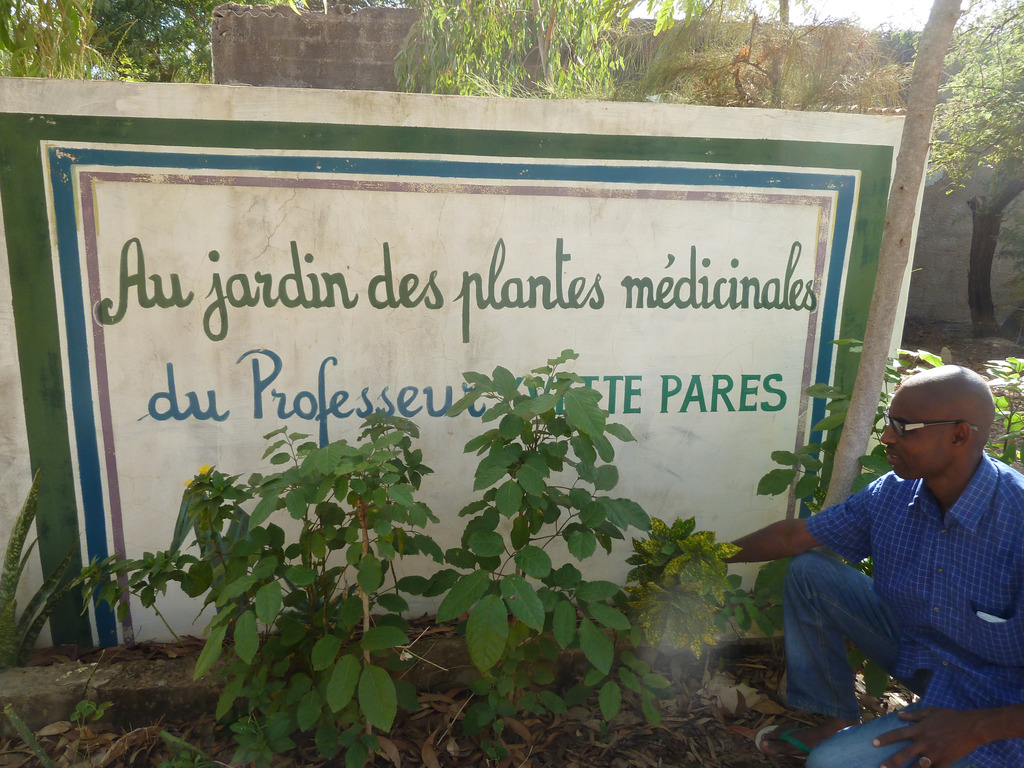
In 2010, the International Year of Biodiversity, the 10th Conference of the Parties to the Convention on Biological Diversity (CBD) adopted the Nagoya Protocol on Access and Benefit-Sharing (ABS) related to the use of genetic resources. In line with the CBD, the Protocol gives special attention to indigenous peoples and local communities (IPLCs), aiming to strengthen their ability to benefit from the use of their traditional knowledge, innovations, and practices associated with genetic resources.
In 2014, France’s biodiversity bill incorporated provisions on “access to genetic resources and fair and equitable benefit-sharing,” transposing the CBD (1992) and the Nagoya Protocol into French law. This issue is significant for France both as a provider of genetic resources with associated traditional knowledge (notably in overseas territories) and as a user of these resources (given the importance of its industrial and research sectors).
LEARNING OBJECTIVES
- Traditional Ecological Knowledge (TEK), indigenous knowledge, traditional knowledge, local knowledge—what do these terms mean?
- Why discuss traditional knowledge? Presentation of issues such as erosion, bioprospecting, biopiracy
- What legal tools and frameworks exist to protect traditional knowledge associated with biodiversity?

TRAINING – PROJECT MANAGEMENT AND ACTION RESEARCH IN SOCIOLOGY AND ANTHROPOLOGY
Social sciences, and particularly anthropology, offer multidimensional perspectives on social phenomena and bring significant added value to many projects. They lead to innovations that can be embraced by society, the economic sphere, and public authorities. Social science studies thus potentially open up a wide range of professional opportunities.
Nevertheless, the professionalization of anthropologists and anthropology in the form of a specialized consultancy remains marginal. AnthropoLinks is one of the rare examples of this in France.
This training is based on the experience and expertise of AnthropoLinks’ founders.
LEARNING OBJECTIVES
- What does anthropological expertise entail? Anthropologists’ skills, anthropology beyond academia, the challenges of expertise
- The anthropologist’s role in consultancy: knowledge producers, international observers, experts in global arenas, rescuing failing projects, supporting all project phases, etc.
- The anthropologist as entrepreneur
TRAINING – SUSTAINABLE FOOD SYSTEMS AND AGROBIODIVERSITY
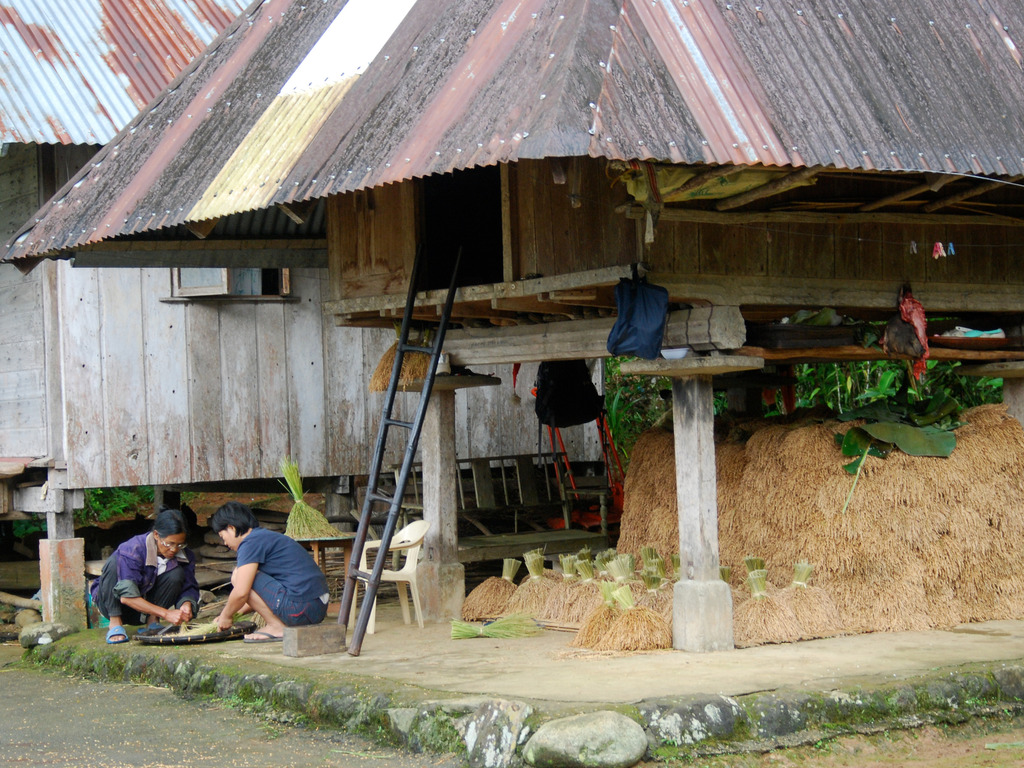
The Sustainable Development Goals have renewed interest in using biological diversity for food and nutrition and its links to agricultural system sustainability. Integrating biodiversity into sustainable food systems is essential if we are to achieve these goals by 2030. Using biodiversity for sustainable agricultural systems that produce diverse and nutritious foods will contribute to conserving these valuable resources; preserving biodiversity resources will make them available for future climate scenarios and today’s nutritional needs.
LEARNING OBJECTIVES
- A review of the concepts of territory, resource, and product: geographical and anthropological approaches
- The challenges of agrobiodiversity, sustainable food systems, and local production
- The complexity of the link between products, places, and societies illustrated through case studies